
How to Keep Your Dog Mentally Stimulated Indoors: Simple Ways to Enrich Your Dog’s Mind Every Day
Discover simple ways to keep your dog mentally stimulated indoors. Learn fun enrichment ideas to reduce boredom, boost confidence, and support calm, happy behavior.
DOG


Keeping your dog mentally stimulated is just as important as physical exercise - especially when you’re spending more time indoors due to weather, schedule, or apartment living. Dogs rely on mental challenges to stay happy, calm, and emotionally balanced. With the right activities, you can turn any indoor space into a fun, enriching environment your dog will look forward to every day.
This post explores practical ideas to enrich your dog’s mental life every day, helping you build a happier, calmer, and more well-rounded companion.
Why Mental Stimulation Matters for Dogs
Mental stimulation helps prevent boredom, anxiety, destructive behaviors, and restlessness.
A mentally enriched dog tends to be:
calmer
more confident
less reactive
better behaved
emotionally fulfilled
Just 10–20 minutes of focused mental activity can tire a dog out as much as a long walk.
Dogs don’t just want activities - they need them for a balanced, healthy life.
1. Rotate Toys to Keep Things Exciting
Dogs quickly lose interest in toys that are always available. Rotating toys every week keeps everything fresh and mentally engaging.
Tips:
Keep 2–3 toys out at a time
Swap them weekly
Include different textures and sounds
Choose toys that encourage sniffing, chewing, or thinking
This simple routine can dramatically boost your dog’s engagement indoors.
2. Create Simple Indoor Scent Games
A dog’s greatest superpower is their nose. Using scent-based activities helps them tap into their natural instincts and provides deep mental enrichment.
Try these easy games:
Hide treats around the room
Place small treats under cups and let your dog “find the right one”
Scatter food on a snuffle mat or towel
Hide toys with a familiar scent
Scent work uses a surprising amount of energy - perfect for rainy days or small spaces.


3. Teach New Tricks or Reinforce Old Ones
Training is one of the most effective ways to mentally stimulate a dog. It strengthens your bond and gives your dog a focused, rewarding challenge.
Great indoor tricks:
Spin
Sit pretty
Paw or high-five
Roll over
Stay + release
Touch (nose to hand target)
Short, fun sessions (5–10 minutes) are enough to challenge your dog without overwhelming them.
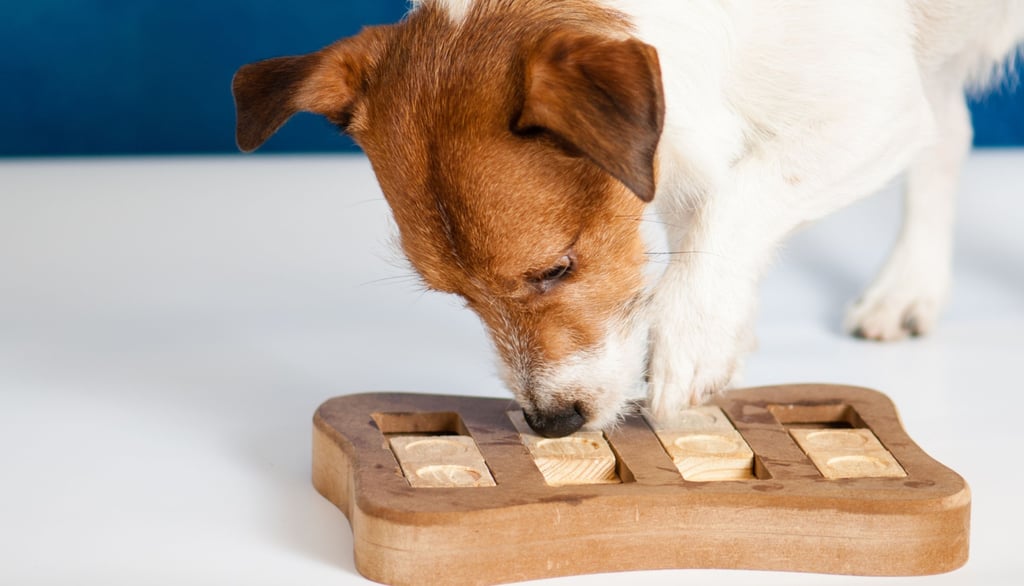
4. Use Puzzle Feeders and Slow-Feed Activities
Puzzle feeders encourage problem-solving, frustration tolerance, and critical thinking. They also slow down fast eaters and make mealtime more engaging.
Options include:
Food puzzles
Slow feeders
Treat-dispensing balls
DIY puzzle boxes using household items
Even a simple cardboard box with hidden treats can be just as fun as store-bought puzzles
5. Build a Mini Indoor Obstacle Course
Indoor obstacle challenges help your dog use their mind and body together - making them perfect for energetic dogs or high-intelligence breeds.
Ideas:
Pillows as “mountains”
Towels as weaving lanes
Chairs for tunnels
Blankets over stools for hide-and-seek corners
You can change the course layout every time to keep it interesting.
6. Play Interactive Games That Challenge Thinking
Mental games help your dog develop patience, listening skills, and self-control.
Great choices include:
“Which hand has the treat?”
Hide-and-seek (you or a toy)
Indoor fetch with rules (sit before fetch, drop on command)
Tug-of-war with structured play cues
Interactive games burn mental energy and help dogs feel connected and engaged.
7. Offer Safe Chewing Options for Stress Relief
Chewing is a natural behavior that helps dogs relieve stress and keep their jaws strong. Offering chew toys that require effort can also stimulate their minds.
Choose durable toys that require gnawing or manipulation.
Try toys that can be stuffed with treats or peanut butter.
Rotate chew toys to maintain interest.
Chew toys help keep your dog calm and mentally engaged.
9. Schedule Short, Consistent Enrichment Sessions
Consistency is more impactful than intensity.A dog who receives small amounts of daily mental stimulation is typically happier and better behaved than one who gets occasional long sessions.
Ideal rhythm:
5–10 minutes of training
10 minutes of scent work
a few minutes of chewing or puzzle play
calm rest afterward
This rhythm creates a healthy, structured daily routine.
10. Personalize Activities Based on Your Dog’s Personality
Just like people, dogs have preferences.
Pay attention to what your dog naturally enjoys:
Sniffers love scent games
Problem solvers enjoy puzzles
High-energy dogs enjoy obstacle play
Velcro dogs love interactive games
Adapt activities to match your dog’s unique style - this creates deeper enrichment and real joy.
Final Thoughts: A Mentally Stimulated Dog Is a Happier Dog
Keeping your dog mentally stimulated indoors isn’t complicated - it simply takes a bit of creativity and thoughtful planning. With scent games, puzzle activities, training moments, and interactive play, you can transform everyday life into meaningful enrichment that strengthens your bond and supports your dog’s emotional wellbeing.
Small, consistent efforts make a big difference. A mentally engaged dog is calmer, more confident, and deeply connected to the world around them - even on days when outdoor adventures aren’t possible.
8. Create a Calm, Enriching Environment
Stimulation isn’t just about activity - a well-designed indoor space supports your dog’s emotional wellbeing.
Create:
A safe resting corner
A cozy bed away from noise
Window views for visual stimulation
Calm background music for relaxation
Dogs thrive when they have both energetic moments and peaceful downtime.
Affiliate Disclosure:
PetRecs participates in the Amazon Services LLC Associates Program, an affiliate advertising program designed to provide a means for sites to earn fees by advertising and linking to Amazon. As an Amazon Associate, we earn from qualifying purchases.
In addition, this website may contain affiliate links from other trusted partners and networks. If you click on these links and make a purchase, we may earn a small commission at no extra cost to you. These commissions help support the content published on this site.
We only recommend products we genuinely believe provide value to pet owners and their pets.
Subscribe to Newsletter


© 2026 by PetRecs.